june 1959.
The first remodeling of the house, a small one, but it was a start.
The house had two rooms and a narrow pantry in the front, and another room in the back, plus a horse stable, just 4x4, and a shed and a small shed lined behind. The small shed was actually a pigpen, but it wasn't easy to feed a piglet on wash alone, and bringing food for it wasn't easy, the only transportation for it being bicycles. I sort of remember we had one once. The trough remained, true concrete.
The front room and the rear room were connected by a roofed terrace, which was perhaps enough in the summer, specially as this corner was facing north, but in winter the cold air was right at the kitchen door, which made it hard to keep it warm.
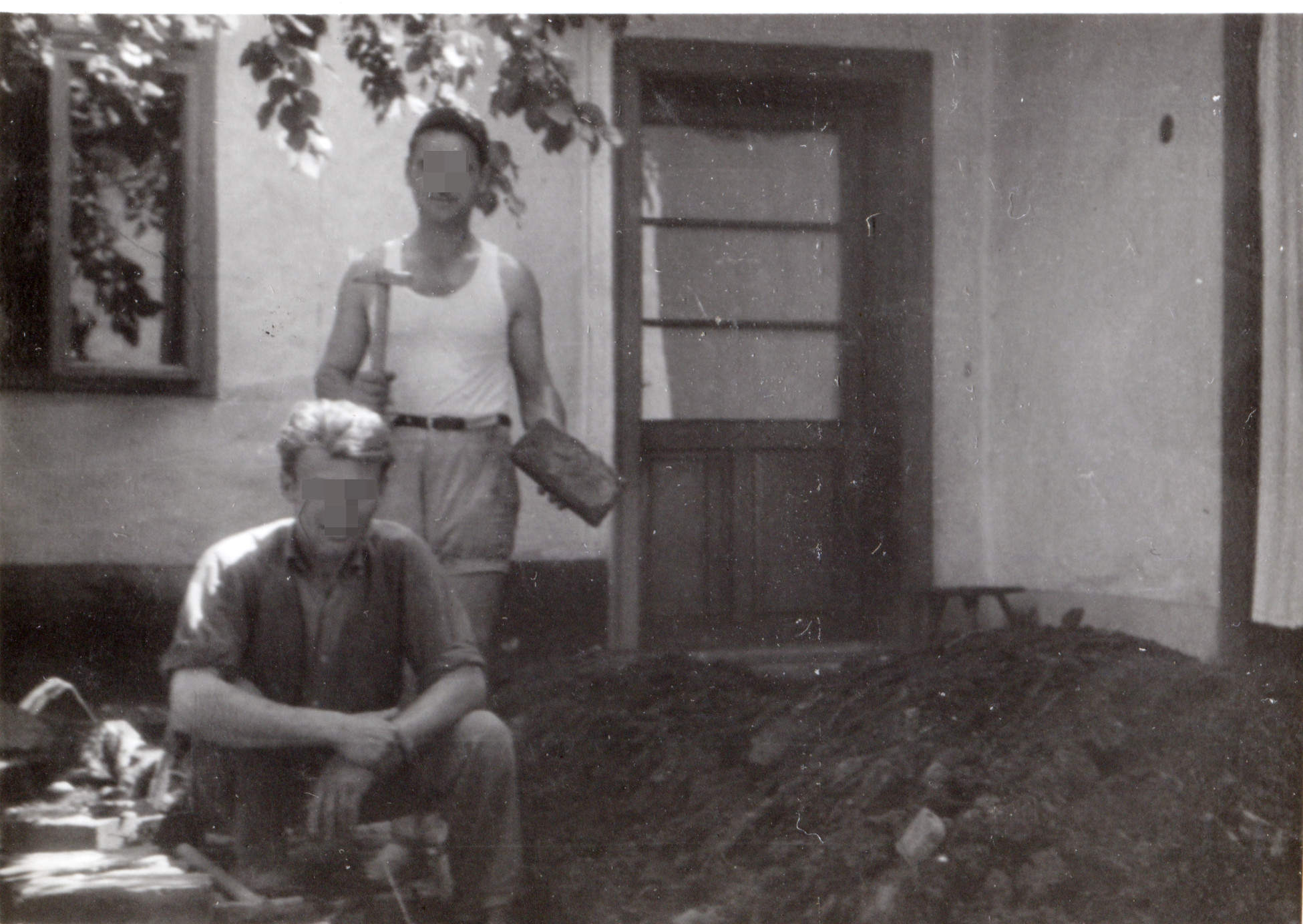
The mason hired to tear the terrace and build the anteroom instead of it was a neighbor (Živa Sejin), a professional mason, or so we heard. He's from the village where we lived for about a year when I was a baby. Knowing that the terrain was once lower and landfilled, thus not too firm to hold walls, dad ordered the guy to bury a few thousand bricks (6?) in the foundation - this one does once, so it better be done right. But no, the professional cut his costs and did the foundation with just below a thousand bricks, and was quite fast at that. Dad later confessed that his only error, apart from hiring the guy in the first place, was that he didn't make him redo it from scratch, or alternately, that he didn't run him away on the spot.
We've learned a few bits about those „professionals“ - these are village masons, who never learned any theory, calculation of load, nothing, they just lay bricks and know perhaps a few tricks. It's a miracle that only a few houses fall apart. Probably they hold because the walls are mostly 50-70 cm thick blocks of pressed clay, but even so, I've later seen how they manage to leave them weakly connected at the corners.
Later in the fall, čiča Rada brought a door and a window and mounted them. Now we had an anteroom.
The door on the picture is still where it was. It was just repainted a few times since, and once the glass in the bottom frame was replaced.
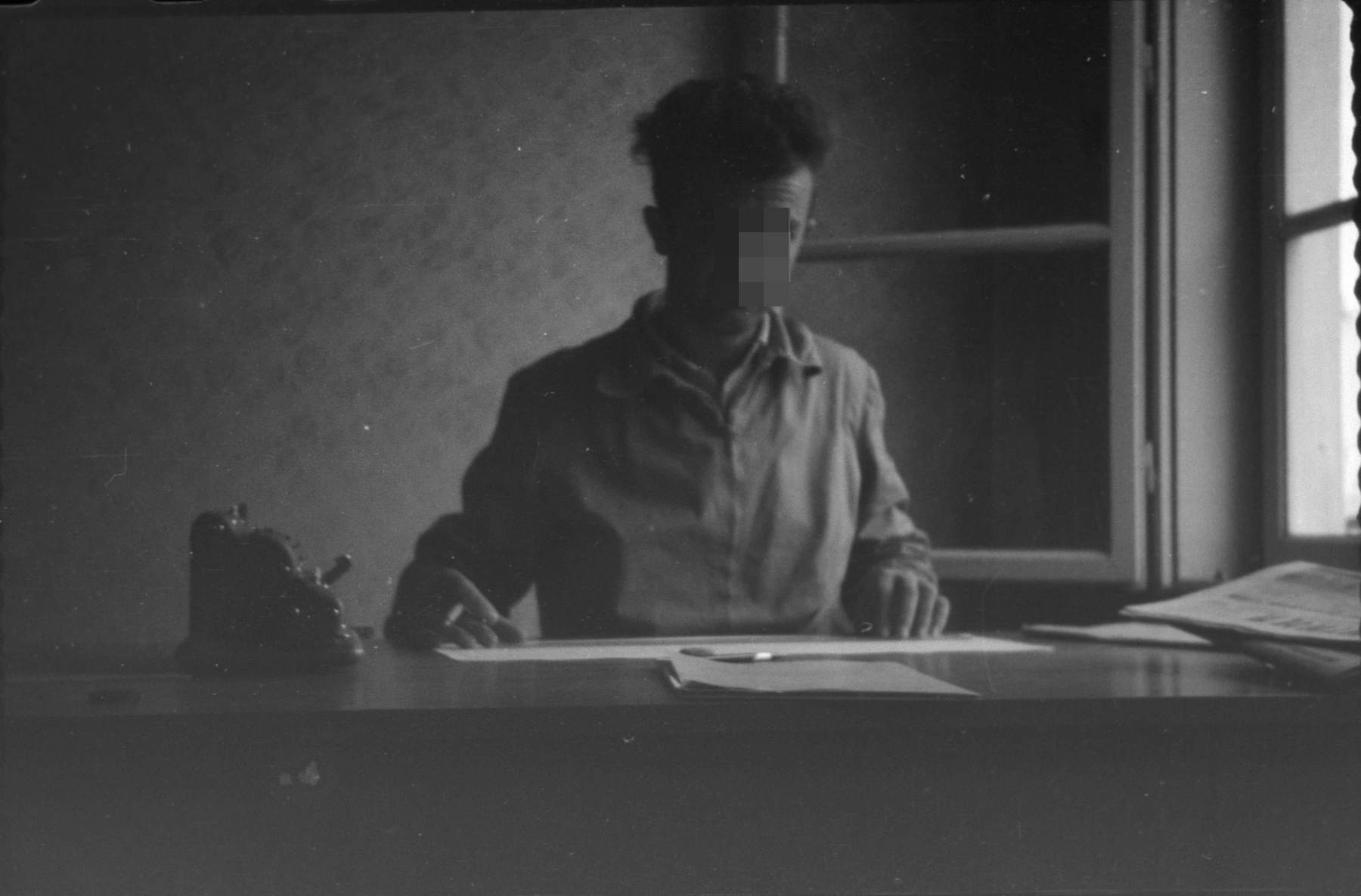
This is dad at work, in that „Bureau for basics of agriculture“ (or fundamentals?), which was supposed to aide the cooperatives with supplies, knowledge, procurement of technology. Which seems to have worked splendidly, as the bureau was disbanded within a few years, job done. The offices were near Žitni, at a place where a sidestreet hits the main one in a sharp angle, and the house in the tip was a school, had a yard there, which didn't actually extend far into the tip, so the place was perfect for turning buses. This is where „Lasta“ had a station. I didn't know whether there was any other bussing enterprise, whether the buses went to other places - „Lasta“ would take you to Belgrade and that was it. The concourse was literally under this window*.
The gadget on the desk is a small mechanical calculator, which worked with cogs and had to be cranked. It was my favorite toy, which I remember well because dad would bring it home often. He was quite a pedant with those numbers, as they meant that someone may get in serious trouble if they don't match and the cause of mismatch turns out to be theft or embezzlement. So he did his best to make the numbers right and timely at least from his side, and took work home and sat long evenings adding all those sacks of seed or fertilizer or whatever. And when he wasn't using the adder, I would. And I learned what not to do with it, what would cause it to clog, and also how to unclog it if it so happens.
----
* ba accident, I'll have offices in the same building, almost forty years later, same hall, yard side windows.
Mentions: august 1971., Radomir Sredljević (čiča Rada), Sejini, in serbian
10-VII-2022 - 17-VII-2024