july 1959.
One negative with three series of shots. The first is my mom and some girl (good looking, BTW) at the beach which was then arranged just opposite the LebarProm, on the river. I never saw that beach - when I got that far, there was nothing of it. There was a big house with quite a wide staircase going down to the beach, where many sat and took in the sun. There's that girl with dad and me, must be mom ho took that shot. Dad wears sandals over socks, which was customary at the time, and is quite thin.
On one shot there's a barge - there were lots of riverboats - and behind it the LebarProm headquarters, with the mansarde already there. When I went there in the nineties, this mansarde looked like a fresh add-on. But look at it, how long ago it was done.
The second series is random shots of people visiting - a business friends of dad's, in a good looking suit, wearing socks with sandals (as was the fashion of the time), with an obviously hungarian wife and probably her sister, somewhere.
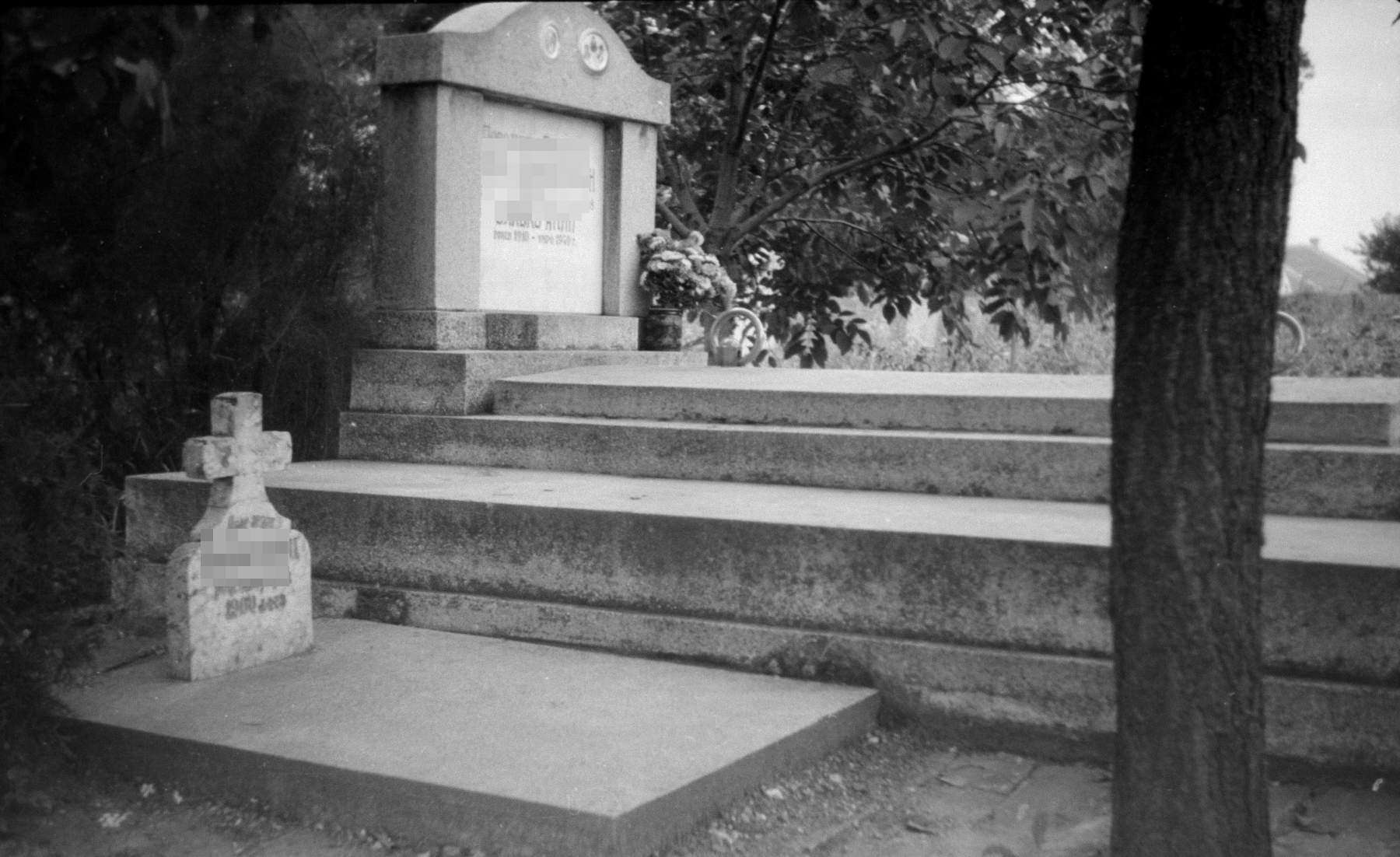
Few pictures from the cemetery, grandfather's (maternal) grave with big brass rings to lift the lid when next one comes in. However, granma wasn't buried there, because, as usual, the other branch of his family owned the spot and they weren't speaking. I actually never knew those people, never talked to them. Perhaps I was friends with some of their descendants and didn't know it. Another picture with some very old man with trim white mustache and a hat (hats weren't usual, except for old village people and some top rank folks, Tito included - see hats), don't know who. Perhaps deda Duša (grandpa Soul, as the literal meaning was, probably real name Dušan, like the emperor).
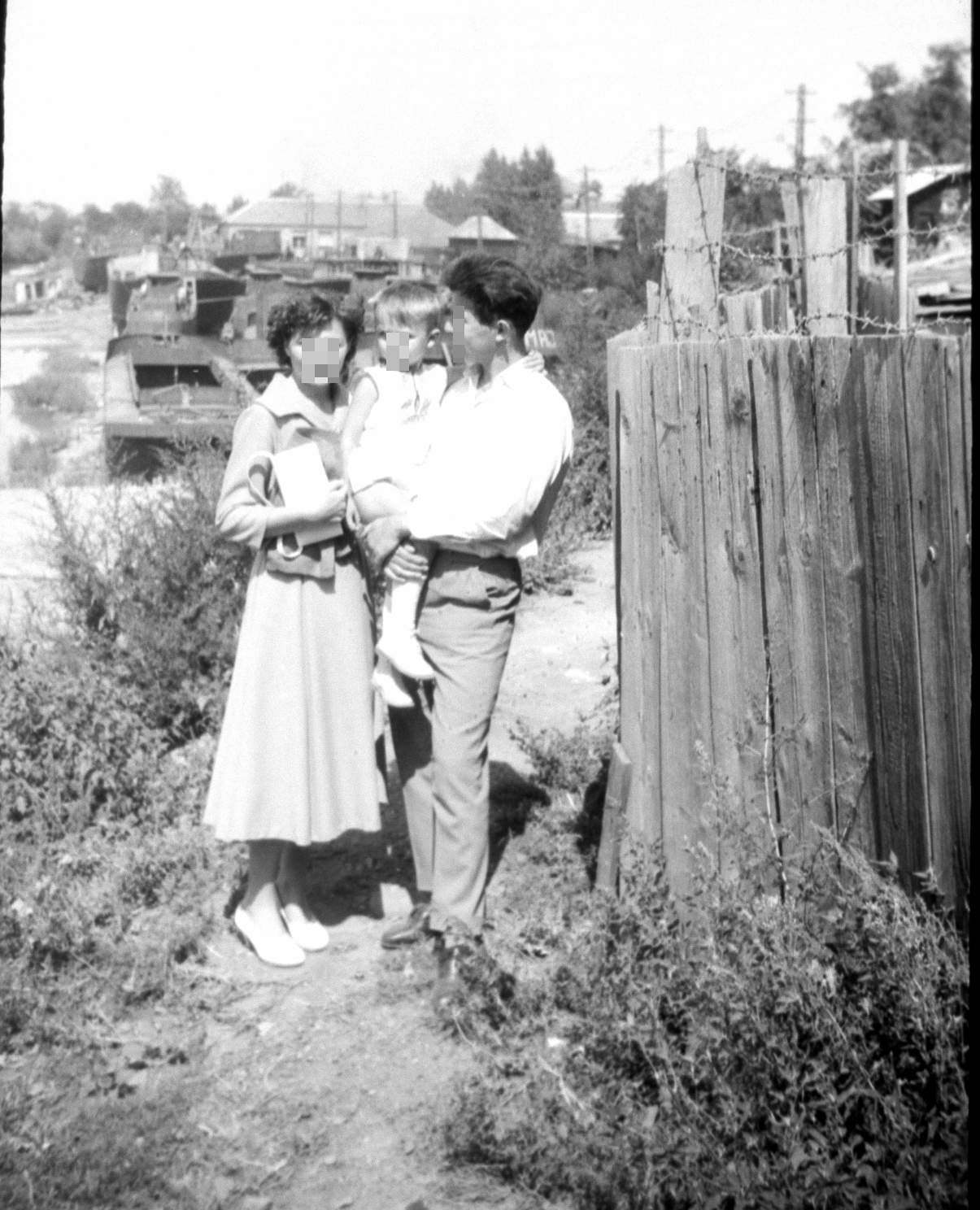
More pictures of the same swimming spot by LebarProm, this time with me and that nice aunt from Belgrade/Zajač and the uncle with funny voice. Then the same folks near the gates of šećerana, with the adjacent park and a (brand new?) bicycle. Women in nice dresses, must have been a sunday afternoon, when we would take a walk there anyway. The pavement from the factory gates was still spanking new, all the concrete tiles straight and even. As of this writing (2014), these are still in place, at least the part between the gates and the railroad; at the crossing they switch from the even side of the street to the odd side. They were reset several times but the soil is soft and they inevitably bend this way or the other, and the vertical ones that held the edges swam away. There are still several such pavements around town, and they all look like this.
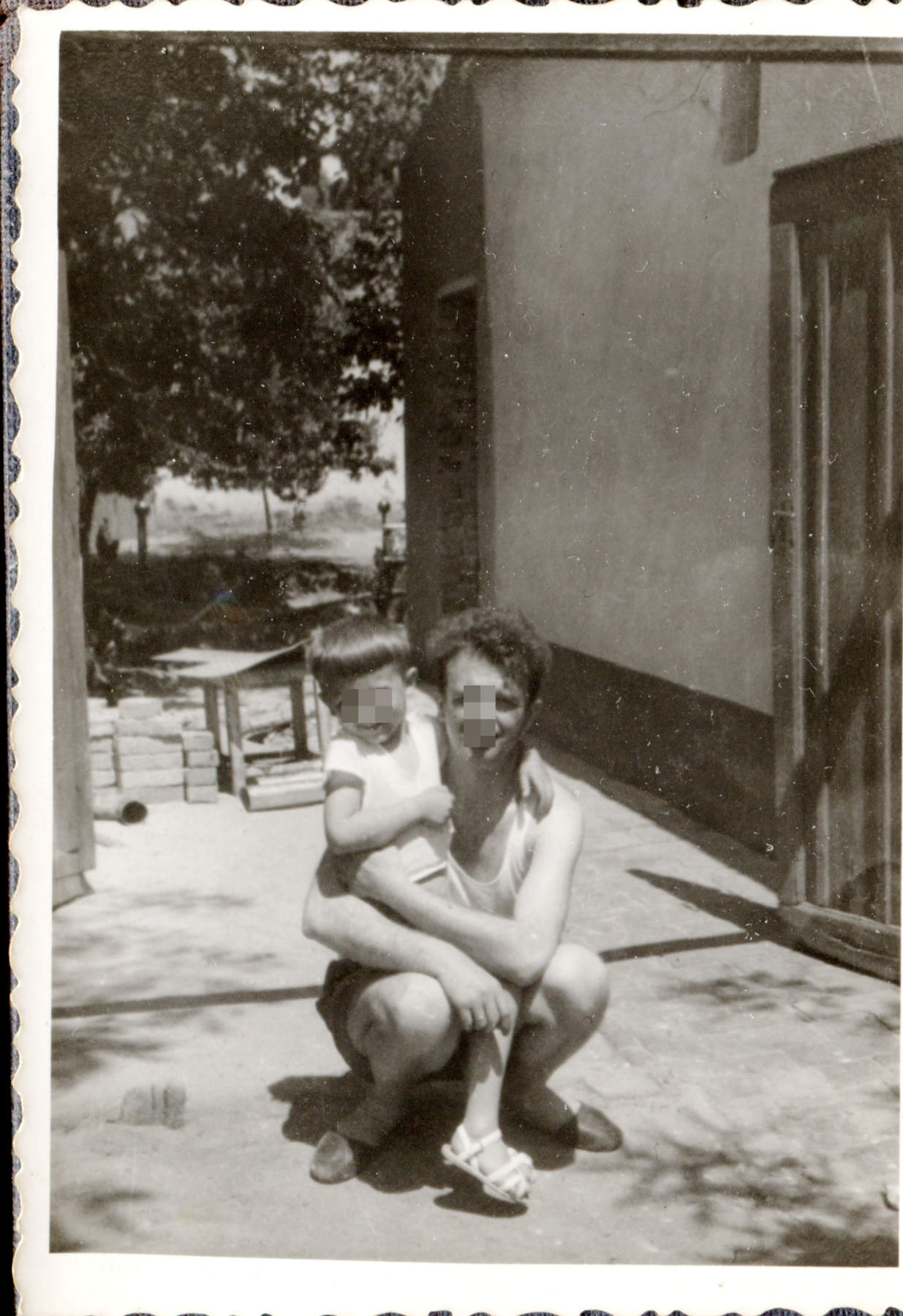
This picture of dad and me reveals the mystery of when was the terrace converted into an anteroom. This summer. Its roof was dismantled, a wall was built with a big three pane window facing the yard, and the shorter wall had a door. The door was made in Zajač - now whether it was uncle Staja or not, I don't remember. Grandpa's brother had a workshop, perhaps not a complete sawmill but with few machines I saw there first (a huge table planer, for one), and was also a skilled woodworker, and I remember it was čiča Rada who brought the door and the window.
The wall still sinks. When they removed the brickwork which made the previous terrace floor, they found that the soil was filled in - it was not old thumped soil, it was freshly flattened, and so dad bought few thousand bricks more than technically necessary, told Živa Sejin, who was a professional (village) mason, to put two thousand bricks underground, as foundation. He saved more than half of that, and the corner still sinks a bit every year, sixty years later, it even tore the tiles on the inside (where bathroom was put later). Dad never forgot this, and now I remember it too. The guy was a drunk, BTW, because of a blot on his past he was trying to forget. Still not an excuse.
At least the doors to the living room and granma's room weren't on the outside walls. Heating was becoming feasible.
Mentions: april 1985., hats, LebarProm, Radomir Sredljević (čiča Rada), Sejini, šećerana, uncle Staja, Zajač, in serbian
6-VII-2014 - 6-II-2026